
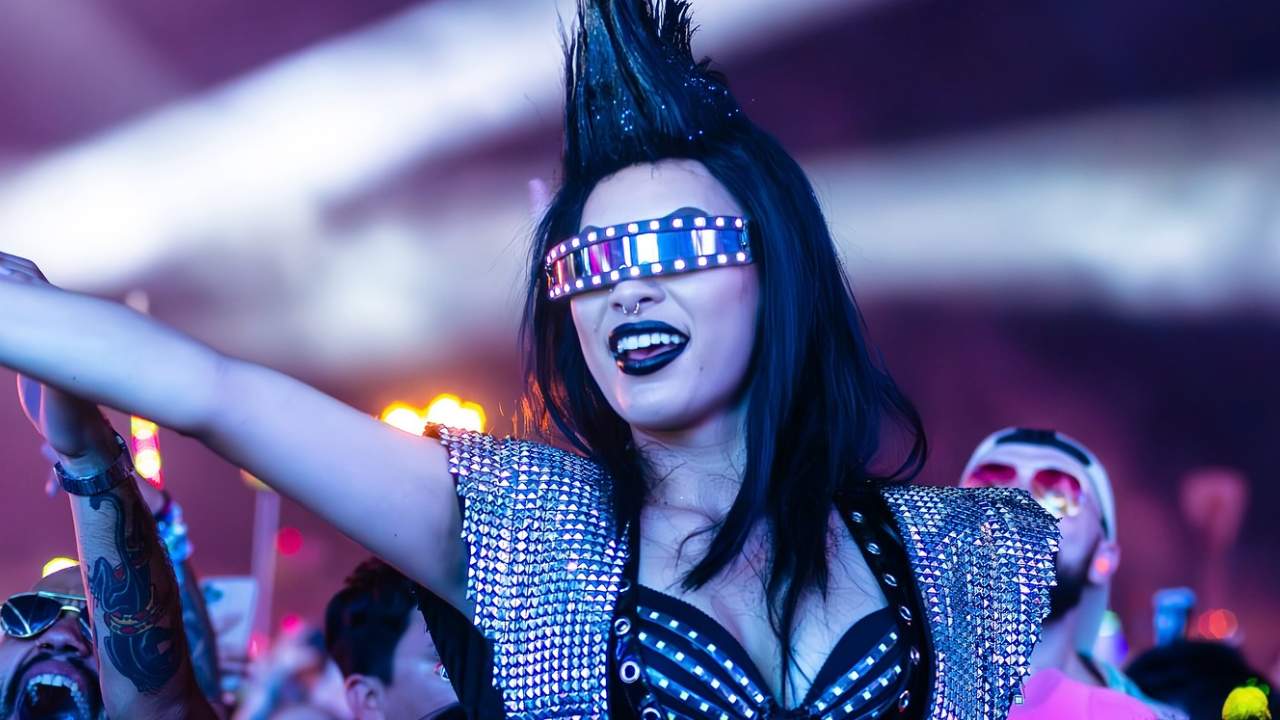
You Have a Rave Alter Ego, And Science Says It’s Real
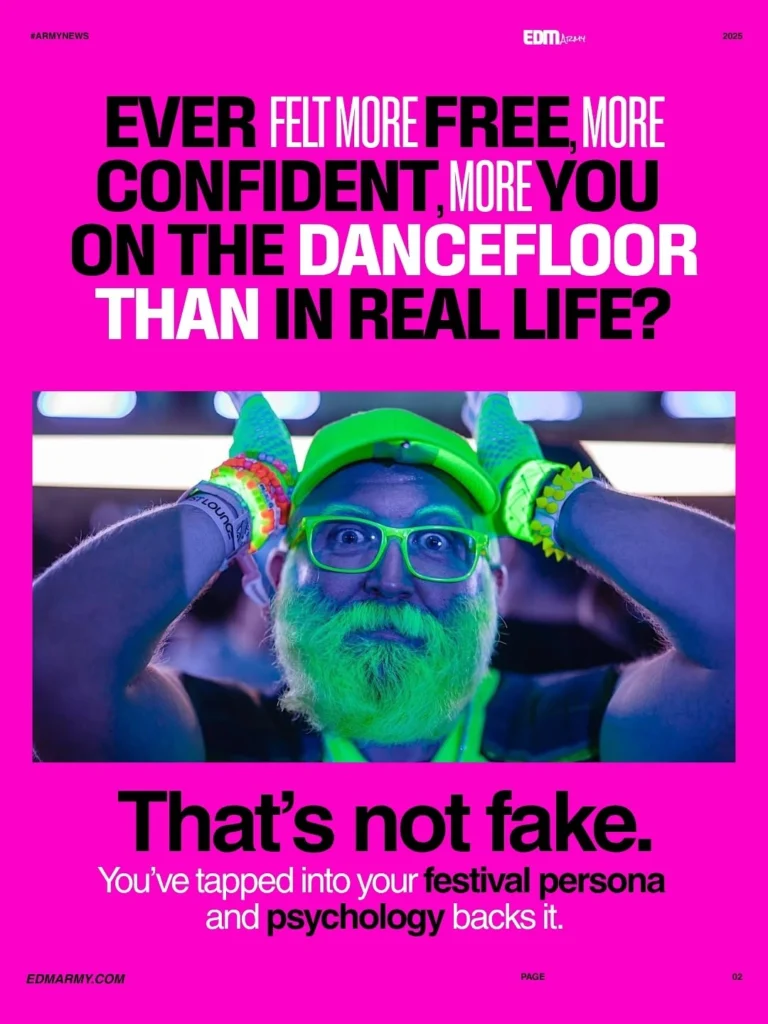
If you’ve ever felt more alive, more confident, or simply more you on the dancefloor than in your daily life, you’re not imagining things. Science supports the idea that your “rave alter ego” isn’t just a performance. It’s a real psychological state shaped by environment, ritual, and self-expression.
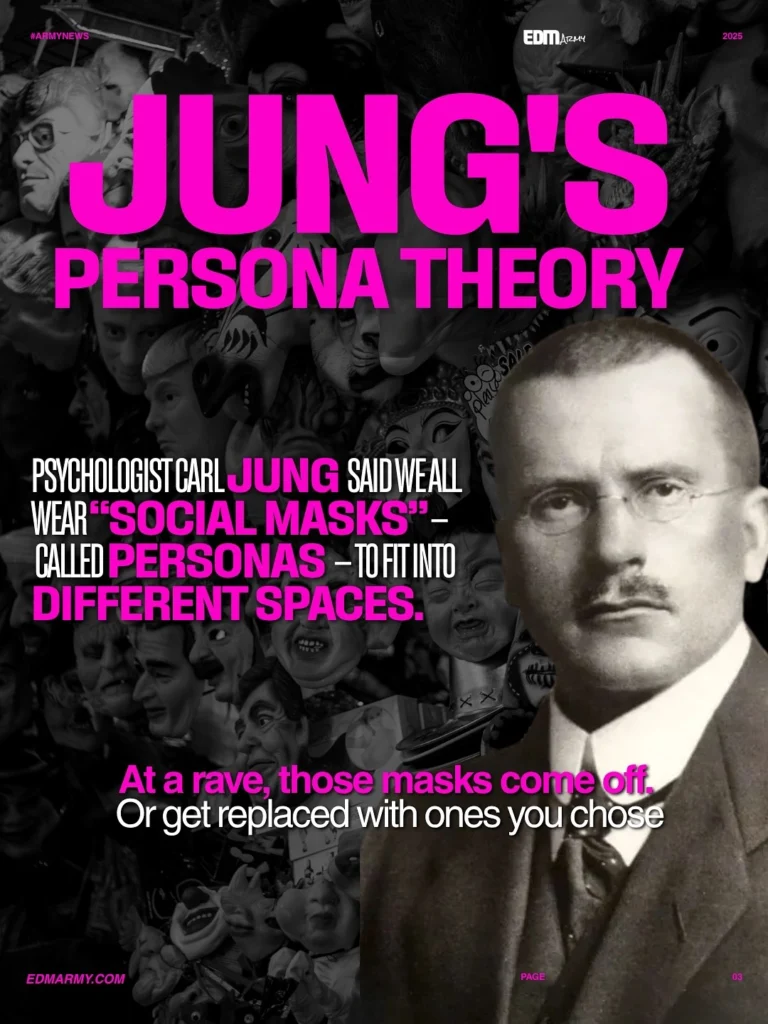
Psychiatrist Carl Jung introduced the idea of the persona, the social masks we wear to function in society. Most of us shift personas between work, family, and friends. But raves offer a rare setting where those default roles can dissolve. In that space, the mask isn’t ripped off—it’s transformed into something you’ve chosen. Your rave persona emerges not as a façade, but as a version of yourself that normally stays hidden.
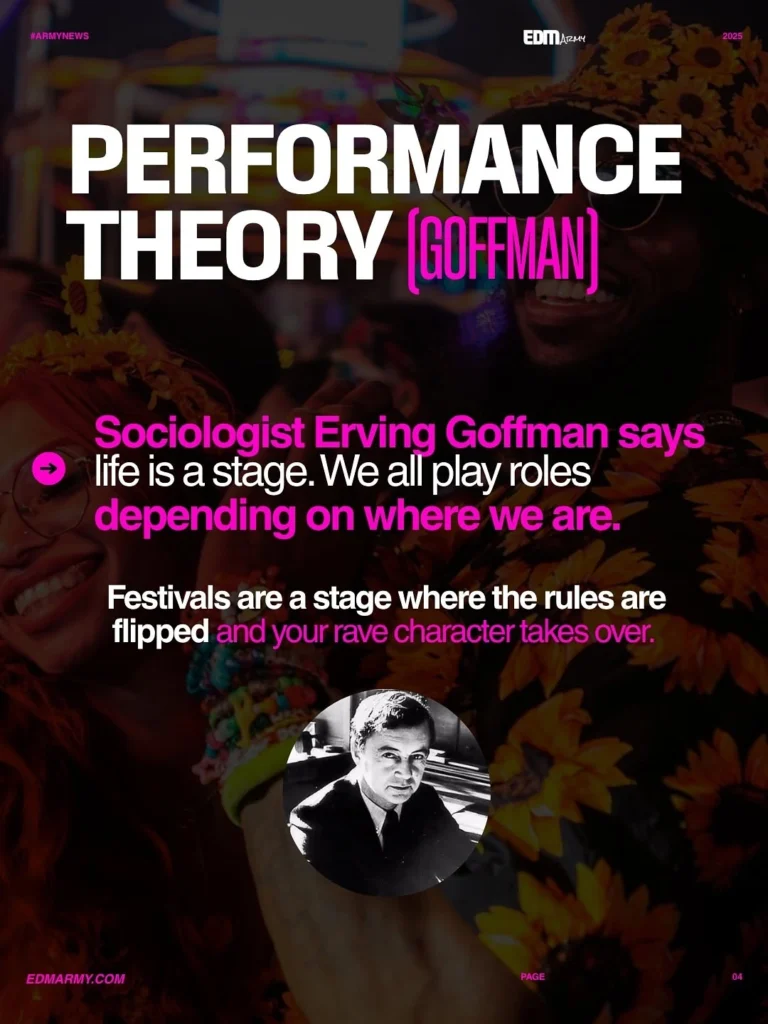
Sociologist Erving Goffman took a similar view in his theory of dramaturgy, describing life as a stage where we perform different roles depending on context. At a rave, the usual social “scripts” break down. The crowd becomes the cast. The music is the narrative. And you, under the lights and sound, are free to inhabit a version of yourself untethered by daily norms.
This psychological shift often leads to what’s known as a flow state, a concept coined by psychologist Mihály Csíkszentmihályi. Flow is that sensation where time slows, fear fades, and your sense of self melts into the moment. Scientific research confirms that dancing, especially in social and musical contexts, can trigger this immersive mental state, aligning with physiological changes like elevated heart rate, emotional release, and deep sensory engagement.
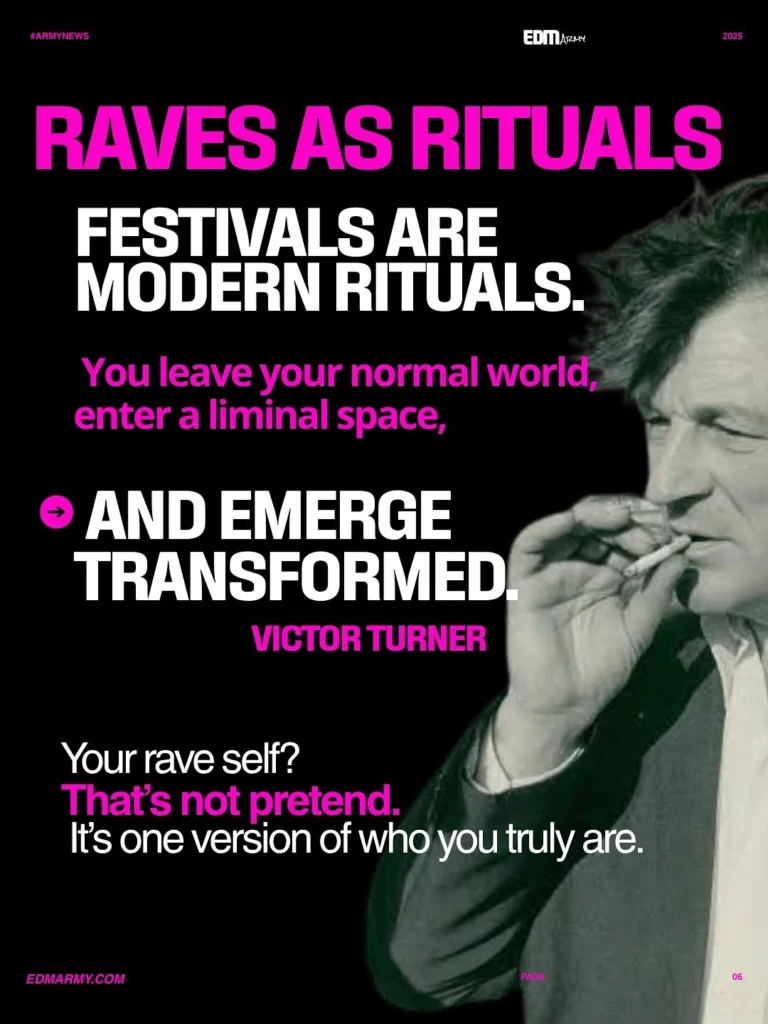
But it goes even deeper. Anthropologist Victor Turner described rituals as moments of liminality, a transition zone where people step out of structured life and re-enter transformed. Festivals mirror that framework: you leave your normal world, enter a charged, symbolic space, and reconnect with a different side of yourself. In Turner’s terms, this experience is not just escapism—it’s identity in motion.
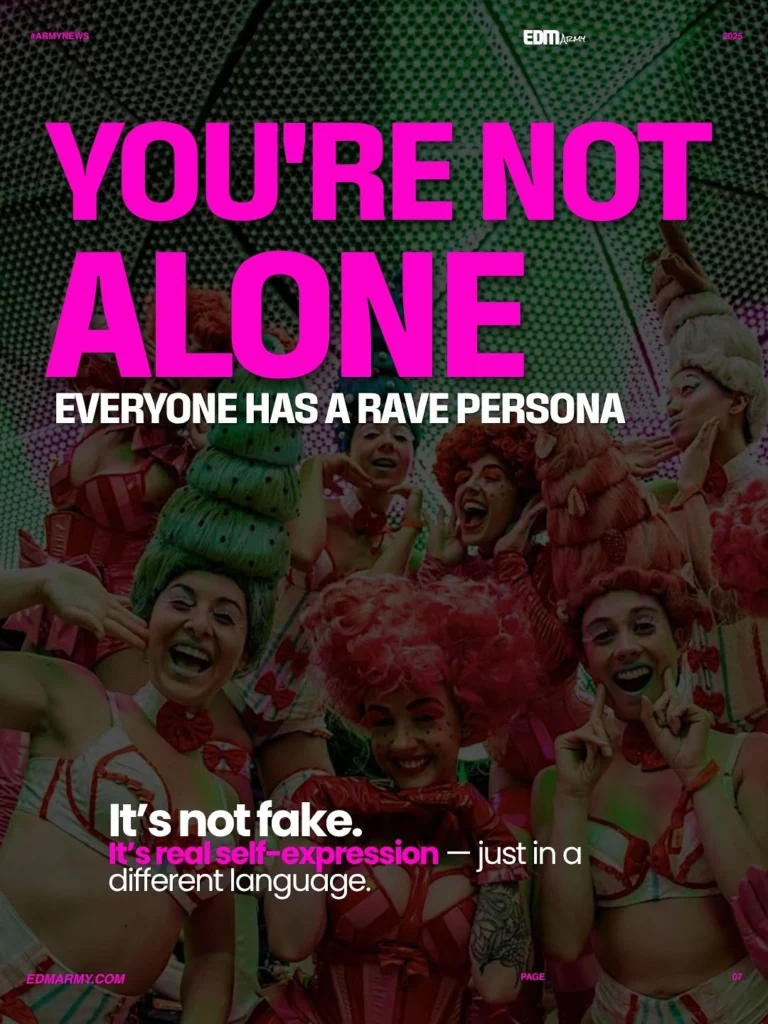
Your rave alter ego isn’t fake. It’s an authentic expression that emerges from a unique blend of sound, space, and communal energy. Under the strobes, you’re not acting, you’re aligning. And for many, that version feels just as real, if not more, than the one they live day-to-day.
Sources
- Jung’s theory of the persona (academic overview)https://web.pdx.edu/~tothm/theory/Presentation of Self.htm
- Goffman’s dramaturgical model in “The Presentation of Self in Everyday Life”https://en.wikipedia.org/wiki/The_Presentation_of_Self_in_Everyday_Life
- Flow state and dance: physiological study published by Frontiers in Psychologyhttps://www.frontiersin.org/articles/10.3389/fpsyg.2020.01000/full
- Flow and autonomic nervous system response in dancers (PMC)https://www.ncbi.nlm.nih.gov/pmc/articles/PMC7266962/
- Victor Turner on liminality and communitas: academic PDFhttps://faculty.trinity.edu/mbrown/whatisreligion/PDF readings/TurnerVictor- Liminality and Communitas.pdf
Follow EDM Army
Related News

Latest News
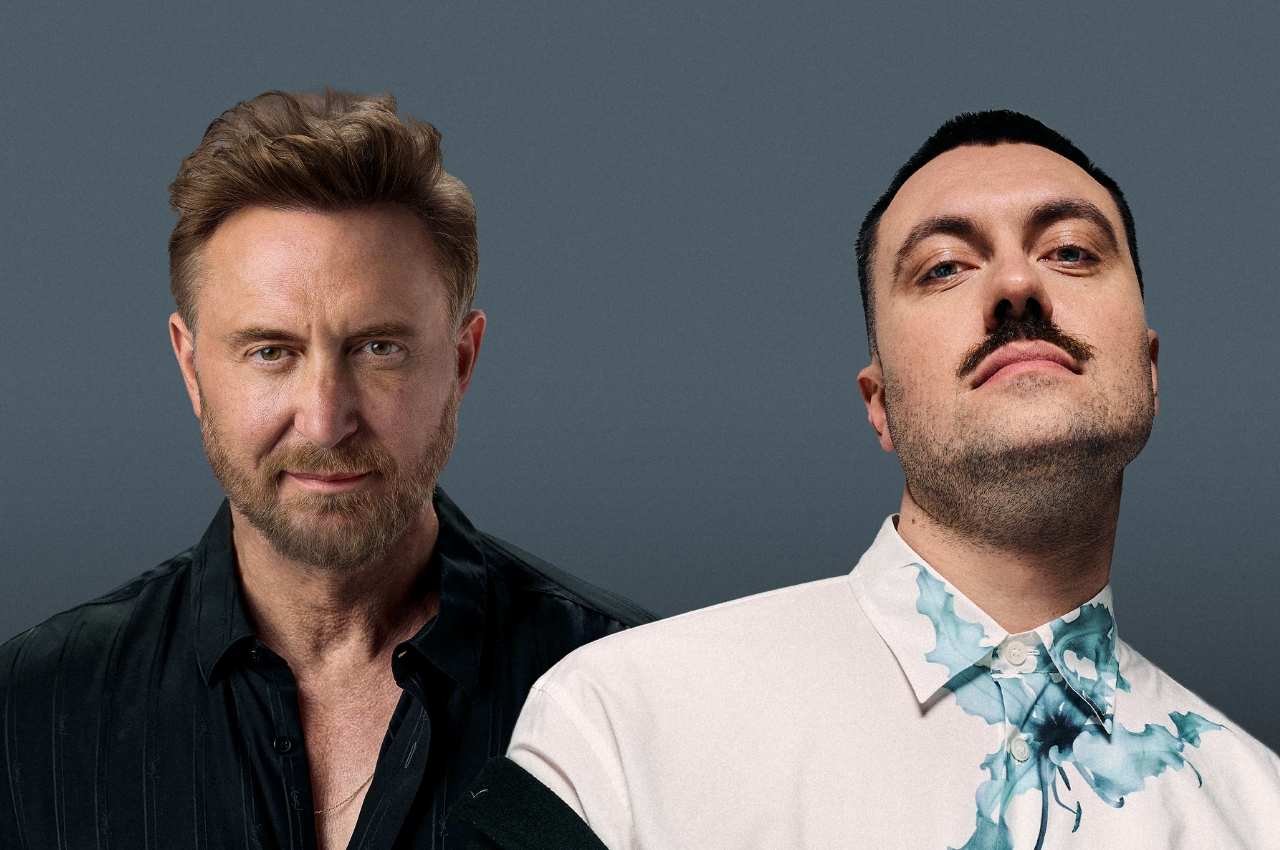
Marlon Hoffstadt & David Guetta Drop “Caught Up”
Oct 09
Mau P Launches Baddest Behaviour Record Label
Oct 09
Skilah Turns Up the Heat with High-Octane Tech House Edit "GOMF BUT LOUDER"
Oct 09
Selfiat Releases Dancefloor DnB Cut “Never Be Alone” via EDMArmy Records
Oct 09
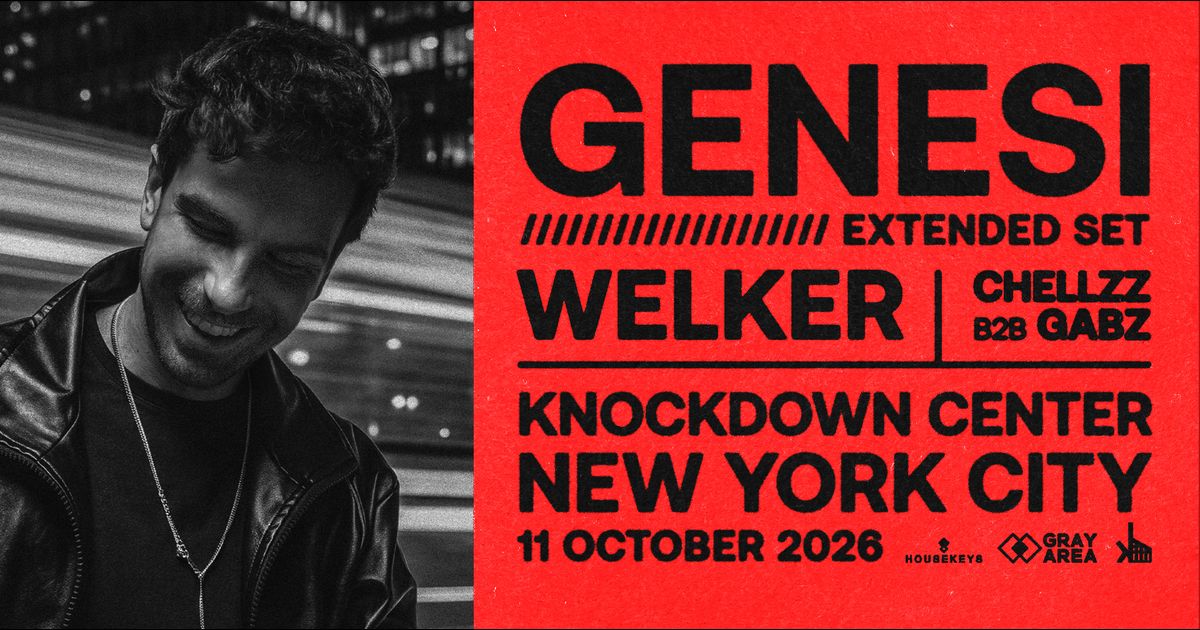
GENESI Brings Extended Set to New York’s Knockdown Center This October
Oct 09
Trending
- 0127-Year-Old Costa Rican Dies After Medical Emergency at EDC ColombiaOct 11
- 02ADE 2026 DJ Contest Offers 8 Artists a Chance to Perform in AmsterdamOct 08
- 03Head Trip Returns After Lightning Cancellation, Calvin Harris Rescheduled for Day 2Oct 11
- 04U.S. Government Investigates Streaming Fraud Involving Bots and AI-Generated MusicOct 11
- 05Mau P Launches Baddest Behaviour Record LabelOct 09